
A name is an important part of your identity. It is who you are and what makes you tick.
My ethnic name and identity became increasingly important to me when I moved to the United Kingdom.
I decided to be known by my Nigerian name, Nwamaka or Amaka for short.
The rich meaning behind my name which literally means “a child is good” or a child is beautiful” was very significant to me. I felt that it signified pride in my rich Igbo heritage, culture, and identity.
I did not envisage that many in the UK, would find it difficult to pronounce my name.
Some people attempted to say my full name, while others preferred to use the shorter version. I have however been in situations where people will not address me by my name or are too lazy to try.
This leaves me with feelings of annoyance and frustration. I have received many emails which simply started off as “Hi”.
Having an African ethnic name when living in a foreign land comes with its own rewards, challenges, and dilemmas.
Here are five of them.
An ethnic name affirms your Identity
Parents give their children ethnic first names to reflect and preserve their culture, faith and identity.
Ethnic names are important to many immigrants because it defines the culture and community which the bearer represents.
It can also be symbolic of the mood or event that took place when the child was born.
It was therefore no surprise that my husband and I gave our three girls’ ethic names when they were born.
Our children have asked why they were given these names and we have explained their symbolic meanings and the reasons we chose them.
Their names are long, but they use the shorter versions. Our two older girls have had experiences of people mispronouncing these shorter versions.
They have even been called the name of other children of similar ethnicity in their class. Our children have become skilled at politely correcting any mispronunciation or name mix up, following open conversations with us about this.
Standing out

I have been asked the meaning of my name, on several occasions and this has been a good conversation starter.
People have made comments about the rich meaning of my name and how beautiful it sounds. I know this sounds cheesy! But I am not one to turn down a compliment.
I have also had some uncomfortable experiences.
On a particular occasion shortly after I came to the UK, I was asked if I needed an interpreter when I was called in for an appointment.
Perhaps this was the standard procedure or based on unconscious bias. I felt slightly annoyed and wondered why I would need an interpreter.
Reflecting on this a couple of years later, I realized that I should have challenged this assumption.
The only way to tackle unconscious bias is to challenge and refute the assumption.
Ethnic name discrimination in hiring
The BBC, the Guardian and a recent study by CSI, noted that candidates with ethnic names often face discrimination during the job-hunting process.
The CSI report highlighted that candidate from minority ethnic backgrounds had to send 80% more applications than their white counterpart to get a positive response from an employer.
The report also showed that name discrimination is at an alarming level for Pakistani and Nigerians.
Particularly Nigerians with relevant degrees and work experience, had to send twice as many applications before they consider them for software engineering and marketing assistant jobs.
These statistics show that name discrimination continues to exist despite the policies in place to combat this.
Mispronunciation and misspelling
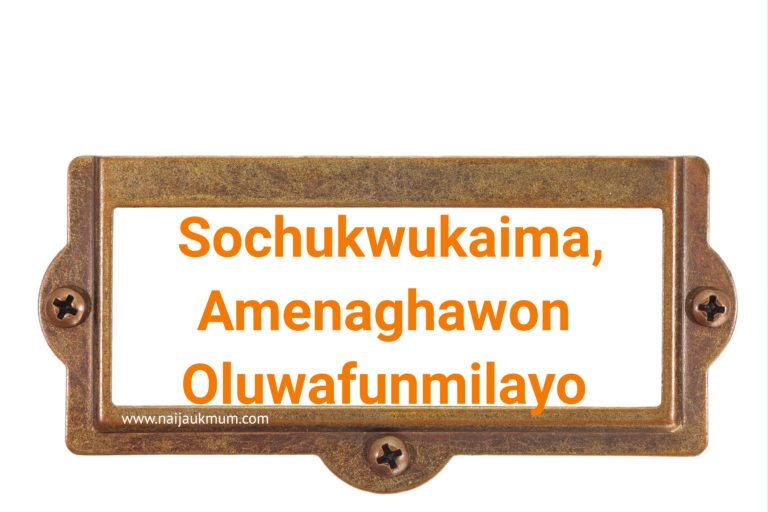
African ethnic names are usually long because of the rich meaning behind them.
However, this can be subject to various mispronunciations and misspellings, which often leaves the bearer uncomfortable.
There is also the mirage of awkwardness which comes with having a hard to pronounce ethnic name.
As, a result of this, some immigrants feel pressured to adopt their Christian names or change their names.
Some new parents decide to give their children English names which they describe as easy to pronounce in their bid to assimilate into the environment.
Whilst this is not an issue, this only solves one problem as the child may continue to grapple with their ethnic surname.
There are also people who prefer to be called their full name but continue to be asked what they want to be known as.
The first time I attended a medical appointment with my youngest daughter, I noticed that a shortened version of her name appeared on the screen when we were called in for the appointment. I was not impressed.
After the appointment I told the receptionist what I wanted my daughter to be called. She apologized and corrected it.
Inability to identify your gender
Having an ethnic name means that people who have not met you, can assume your gender.
Back home in Nigeria, everyone knew that Amaka was a female name so there was never any confusion about what gender I was.
Since moving to the UK, I have often received a letter addressed to Mr Amaka Ibuzo.
People assume my gender and sometimes get it wrong. This may or may not be a big deal depending on the situation. But definitely something to think about.
Conclusion
It is not a pleasant feeling when people do not say your name because it is uncommon or different.
Choosing to use a shortened version of your name, a nickname, a Christian name or changing your name completely should be your choice.
Your environment should not dictate this. Neither should you do this to make people comfortable.
I feel proud that I have an ethnic name despite some negative experiences I have had over the years.
We live in a multicultural environment which comes with diverse names, cultures, and identities.
A name is an important part of one’s identity and getting its pronunciation and spelling right is key.
You should take the time to correct any mispronunciation or challenge any name stereotype.
You should also remind people you interact with regularly, to say your name slowly and repeat it over and over. This will help them get used to saying it.
Let me know your experiences with ethnic names and how you have handled any issues.